
Quick Answer
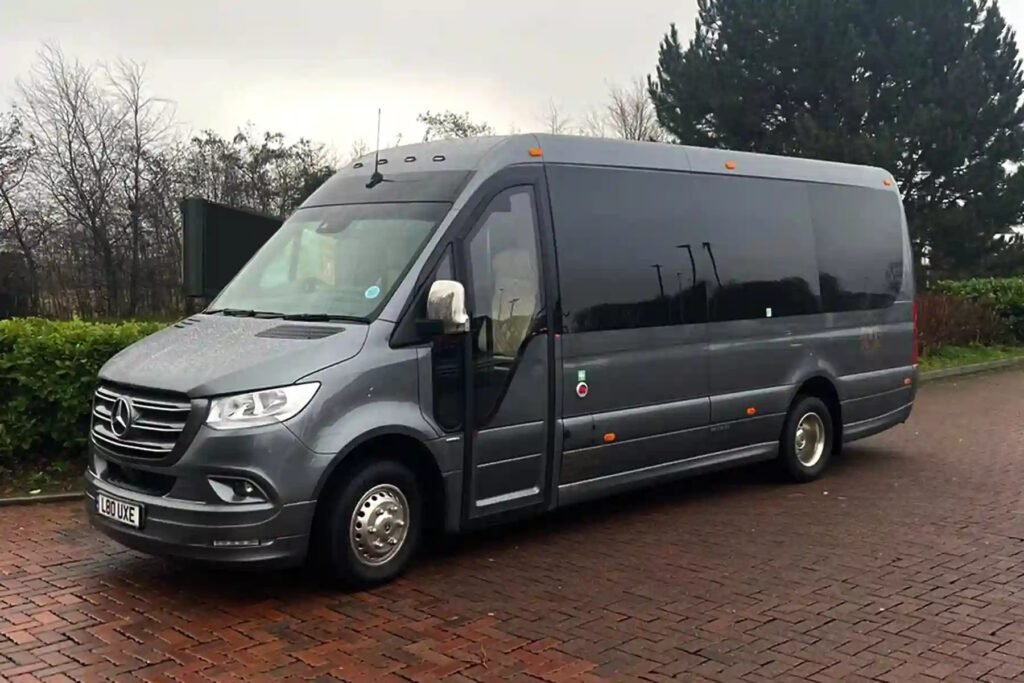
Corporate minibus hire is the booking of an 8 to 33-seat minibus, usually with a professional driver, for business use such as staff commutes, conferences, airport transfers, and company events. As of July 2026, UK operators typically charge between £180 and £450 per day depending on vehicle size, mileage, and driver hours. Most reputable firms hold an operator’s licence issued by the Driver and Vehicle Standards Agency (DVSA) and offer both self-drive and chauffeur-driven options.
Key Takeaways
- Corporate minibus hire covers staff shuttles, event transport, and executive travel, with vehicles ranging from 8 to 33 seats.
- UK day rates in 2026 generally sit between £180 and £450, with driver costs and fuel usually included in quoted packages.
- A minibus with a professional driver requires no extra licence from staff, while self-drive hire needs a category D1 entry on a UK driving licence.
- Booking 2–3 weeks ahead is recommended for events, and 24–48 hours’ notice is often enough for one-off staff shuttle runs.
- Cities including London, Manchester, Birmingham, Leeds, and Bristol have the highest concentration of corporate minibus operators, making same-day and next-day availability more likely there.
Businesses across the UK are increasingly turning to minibus travel to solve two recurring headaches: getting staff to and from work reliably, and moving groups of employees or clients to conferences, away days, and site visits without the cost or hassle of multiple taxis. This guide breaks down how corporate minibus hire works, what it costs, and how to choose the right option for your business, wherever you’re based in the UK.
What Is Corporate Minibus Hire and How Does It Work?
Corporate minibus hire is a transport arrangement where a business books a minibus, typically seating between 8 and 33 people, either for a single event or on a recurring schedule. The two main models are:
- Chauffeur-driven hire – the operator supplies a licensed driver, fuel, and insurance as part of the package.
- Self-drive hire – the business rents the vehicle and a nominated employee drives it, provided they hold the correct licence category.
Most UK operators require the vehicle to be booked through a private hire operator’s licence, which is issued and monitored by local licensing authorities and the DVSA. This licensing structure exists to keep passenger transport safe and accountable, and it’s worth checking that any operator you contact can show a valid licence number before you book.
For businesses, the appeal is straightforward: one minibus replacing four or five taxis cuts cost, reduces the chance of staff arriving late or separately, and gives HR or events teams a single point of contact rather than juggling multiple bookings.
Why Do Businesses Use Minibus Hire for Staff Transport?
Staff shuttle minibus hire has grown steadily since 2023 as more companies moved to hybrid schedules with fixed office days, according to workplace transport surveys referenced by UK transport bodies such as Logistics UK. When a large share of a workforce needs to be at a site on the same two or three days a week, a scheduled shuttle service often works out cheaper per head than reimbursing individual travel or car park costs.
Common staff transport use cases include:
- Commuter shuttles between a train station and an out-of-town office or industrial estate
- Shift transport for warehouse, logistics, or manufacturing staff working outside normal public transport hours
- Site-to-site transfers for construction, events, or field service teams
- Airport and hotel transfers for relocating or visiting employees
A recurring shuttle contract usually costs less per journey than one-off bookings, because operators can plan driver rotas and vehicle use around a fixed schedule.
Business Event Minibus Hire: Conferences, Away Days, and Client Visits
Business event minibus hire covers a different but related need: moving groups reliably to a single event, often on one specific date. This includes:
- Conference and exhibition transport from hotels or stations to venues
- Company away days and team-building trips
- Product launches and client hospitality events
- Multi-site company meetings requiring group travel between offices
For events, timing accuracy matters more than for daily commutes, since a delayed shuttle can disrupt an entire schedule. Experienced event organisers typically build in a 15 to 20-minute buffer per pickup point and confirm final passenger numbers with the operator 48 hours before the event, since minibus size (and therefore price) is usually locked in based on headcount.
How Much Does Corporate Minibus Hire Cost in the UK?
Pricing depends on vehicle size, hire duration, mileage, and whether a driver is included. Based on typical UK market rates as of July 2026:
| Vehicle Size | Typical Use Case | Approx. Day Rate (with driver) |
|---|---|---|
| 8–9 seater | Small team transfers, client visits | £180–£250 |
| 12–16 seater | Staff shuttles, small conferences | £220–£320 |
| 17–24 seater | Company away days, larger events | £280–£380 |
| 33 seater (coach-style) | Large conferences, whole-department transport | £350–£450 |
These figures are indicative averages drawn from typical UK operator pricing structures and can vary by region, season, and how far in advance you book. London and the South East tend to sit at the higher end due to congestion charges, parking, and driver wage differences, while rates in the North and Midlands are often 10–15% lower.
Chauffeur-Driven vs Self-Drive: Which Is Better for Business Use?
| Factor | Chauffeur-Driven Hire | Self-Drive Hire |
|---|---|---|
| Licence needed | None for passengers | D1 category on driver’s licence |
| Insurance | Included | Business must arrange or extend cover |
| Liability if delayed/accident | Operator responsible | Business/driver responsible |
| Best for | Events, staff shuttles, airport runs | Very short, local, low-budget trips |
| Driver fatigue rules (WTD) | Managed by operator | Business must monitor hours |
For most corporate use, chauffeur-driven hire is the more practical and lower-risk option. It removes the need to check an employee’s licence category, keeps the business clear of Working Time Directive driving-hour obligations, and means the vehicle is covered under the operator’s commercial insurance rather than the company’s own policy.
Step-by-Step: How to Book Corporate Minibus Hire
- Confirm passenger numbers – this determines vehicle size and price bracket.
- Set pickup points and timings – list every stop, including estimated walking or waiting time.
- Request a written quote – ask for a breakdown of driver hours, mileage allowance, and any waiting charges.
- Check licensing and insurance – ask for the operator’s licence number and passenger insurance confirmation.
- Confirm cancellation terms – most UK operators require 24–48 hours’ notice for a full or partial refund.
- Book 2–3 weeks ahead for events, or 24–48 hours ahead for a single staff shuttle run, to secure the vehicle size you need.
Local Angle: Minibus Hire Across the UK’s Business Hubs
Corporate minibus demand is not evenly spread. Operator density and next-day availability are strongest in and around the UK’s largest commercial centres:
- Minibus hire London – the highest concentration of operators, driven by demand from the City, Canary Wharf, and the exhibition circuit around ExCeL and ancillary conference venues.
- Minibus hire Manchester – strong demand from the Media City and Northern Quarter business districts, plus events at Manchester Central.
- Minibus hire Birmingham – supported by the NEC and ICC event calendar, making business event minibus hire particularly common here.
- Minibus hire near me searches spike around major office parks and business estates in commuter towns surrounding these cities, where public transport links are weaker.
If your business sits just outside a major hub, for example in a town near Manchester or Birmingham rather than the city centre, it’s still usually possible to get same-day quotes, but next-day vehicle availability during peak conference weeks (typically March, June, September, and October) can be tighter, so earlier booking is worth it.
FAQs: Corporate Minibus Hire
How far in advance should I book a corporate minibus? For events, book 2–3 weeks ahead to secure your preferred vehicle size. For a one-off staff shuttle, 24–48 hours’ notice is usually enough, though availability tightens during busy conference months.
Do I need a special licence to drive a hired minibus? Only for self-drive hire. Driving a minibus with 9–16 seats generally requires category D1 on a UK licence, which most car-only licence holders do not have. Chauffeur-driven hire avoids this issue entirely.
Is chauffeur-driven minibus hire more expensive than self-drive? It costs more upfront but often works out cheaper overall once you factor in insurance, fuel, driver hours, and liability risk. Most businesses find chauffeur-driven hire better value for anything beyond a very short, local trip.
Can a corporate minibus be booked for a recurring staff shuttle? Yes. Most operators offer weekly or monthly contracts for regular staff transport, and these are typically priced lower per journey than one-off bookings because the driver schedule can be planned in advance.
What size minibus do I need for a 20-person conference transfer? A 24-seater is the standard choice for 20 passengers, allowing room for luggage and last-minute additions without needing a second vehicle.
Are corporate minibus operators regulated in the UK? Yes. Operators must hold a private hire operator’s licence issued through their local licensing authority, alongside DVSA compliance for vehicle standards and driver conduct. Always ask for a licence number before booking.
Conclusion
Corporate minibus hire gives UK businesses a practical way to manage staff transport and event logistics without the cost and coordination problems that come with booking several taxis or relying on individual car journeys. Whether you need a recurring staff shuttle, a one-off business event minibus, or executive transport for client visits, choosing a licensed, chauffeur-driven operator remains the safest and most cost-effective route for most companies. As demand patterns shift with hybrid working through 2026, booking early, confirming licensing, and matching vehicle size to passenger numbers will keep your corporate travel running smoothly. If your business is planning an event or reviewing staff transport options, it’s worth requesting quotes from two or three local operators to compare pricing and availability before you commit.
